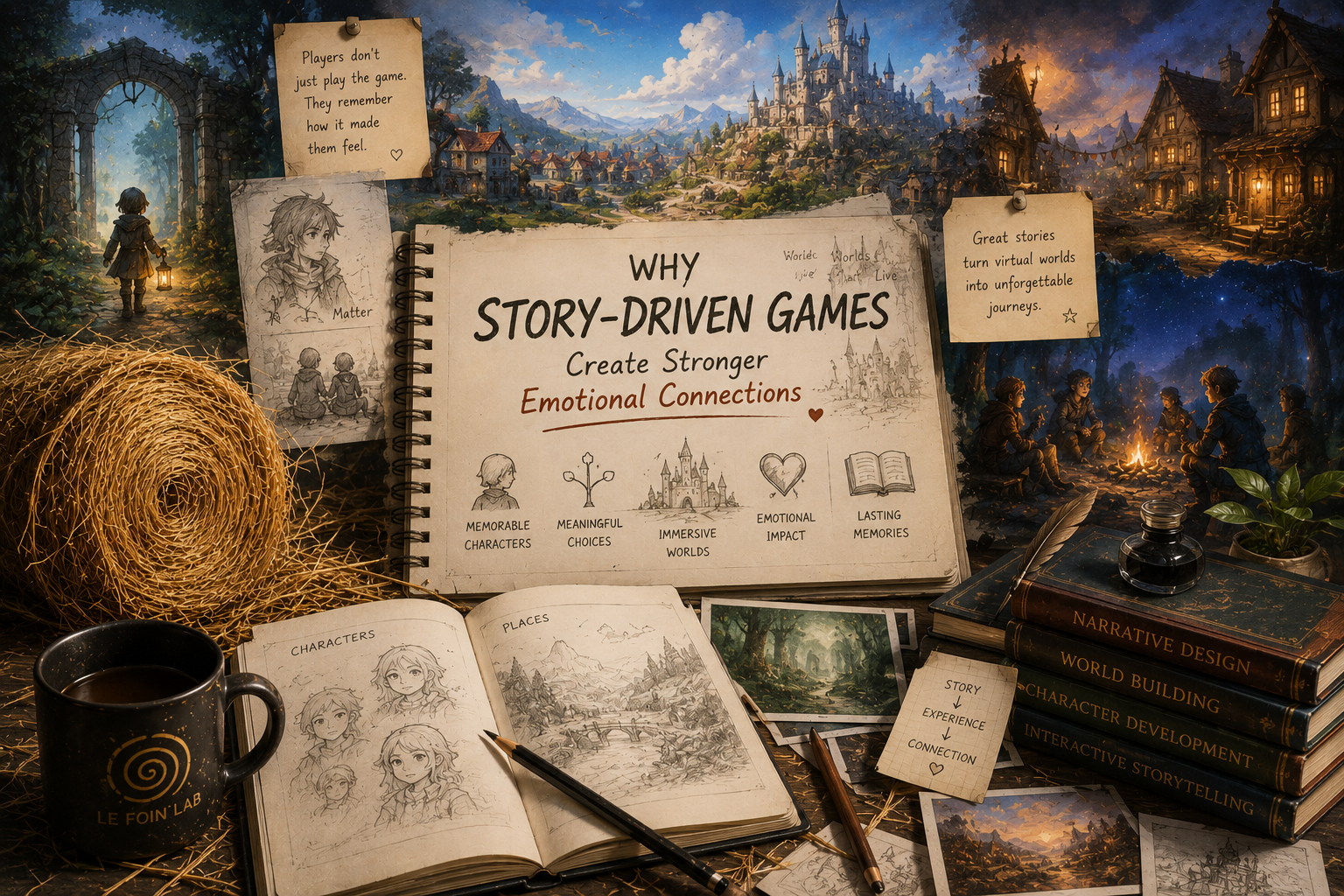
The Power of Story in Modern Games
For decades, video games were often judged by graphics, mechanics, and technical innovation.
Today, many players remember something entirely different.
They remember characters.
They remember worlds.
They remember stories.
A growing number of players are seeking experiences that leave an emotional impact long after the game ends. This is why story-driven games have become one of the fastest-growing segments of the gaming industry.
From indie adventures to large-scale role-playing games, narrative experiences continue to prove that meaningful stories can be just as important as gameplay itself.
What Makes a Story-Driven Game Different?
A story-driven game places narrative at the center of the player experience.
Instead of focusing primarily on competition or skill mastery, these games encourage players to explore characters, relationships, mysteries, and world-building.
Common elements include:
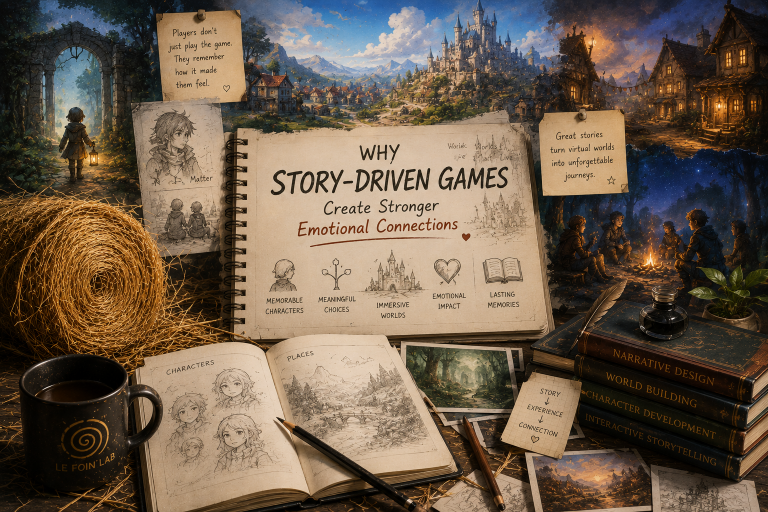
- Rich character development
- Meaningful player choices
- Emotional storytelling
- Immersive world-building
- Environmental storytelling
- Multiple narrative paths
Players do not simply watch a story unfold.
They become part of it.
Interactive Storytelling Changes Everything
Books allow readers to imagine.
Films allow viewers to observe.
Games allow players to participate.
This is what makes interactive storytelling unique.
Every decision creates a sense of ownership over the narrative.
Even small choices can strengthen emotional engagement because players feel responsible for the outcome.
Interactive storytelling transforms audiences from passive observers into active participants.
As a result, the emotional impact often becomes stronger than traditional media.
Why Players Remember Worlds More Than Mechanics
Many game mechanics eventually become familiar.
Stories remain memorable.
Players often return to their favorite games not because of combat systems or progression trees, but because they miss the world itself.
A carefully designed fictional world can create:
- Curiosity
- Wonder
- Emotional attachment
- Community discussion
- Long-term engagement
World-building is one of the most powerful tools available to modern game developers.
When players care about a world, they naturally want to spend more time inside it.
The Rise of Indie Narrative Games
Independent developers have become leaders in narrative innovation.
Without the pressure of massive budgets, indie studios can experiment with unique themes, artistic styles, and unconventional storytelling methods.
Many successful indie games focus on:
- Personal stories
- Emotional journeys
- Character relationships
- Creative exploration
- Meaningful choices
These projects demonstrate that powerful experiences do not require enormous teams.
They require vision.
The Future of Games Is Human-Centered
Technology continues to evolve rapidly.
Artificial intelligence, procedural generation, virtual reality, and new development tools will reshape the industry.
Yet the most successful games will likely continue to focus on a timeless principle:
People connect with stories.
Players want experiences that help them understand characters, explore ideas, and discover meaning.
Technology may change.
Human curiosity remains the same.
How Le Foin® Lab Approaches Games
At Le Foin® Lab, we believe games are more than entertainment products.
They are living worlds built from curiosity, imagination, and storytelling.
Our philosophy, Research Meets Entertainment, guides everything we create.
We explore the intersection of science, narrative systems, comics, books, software, and game design to build experiences that inspire discovery and emotional connection.
For us, world-building is not simply creating a setting.
It is creating a place worth remembering.
Final Thoughts
The future of gaming will not be defined solely by graphics or technology.
It will be defined by experiences that make players feel something.
Story-driven games continue to grow because they offer what many people seek most: meaningful connections, memorable worlds, and stories worth exploring.
As the industry evolves, storytelling may become its most valuable innovation.
Because players rarely forget a world that felt alive.
About the Author